Serving Coppell
Structural Drying in Coppell
Call us for a free structural drying estimate
Serving Coppell
Call us for a free structural drying estimate
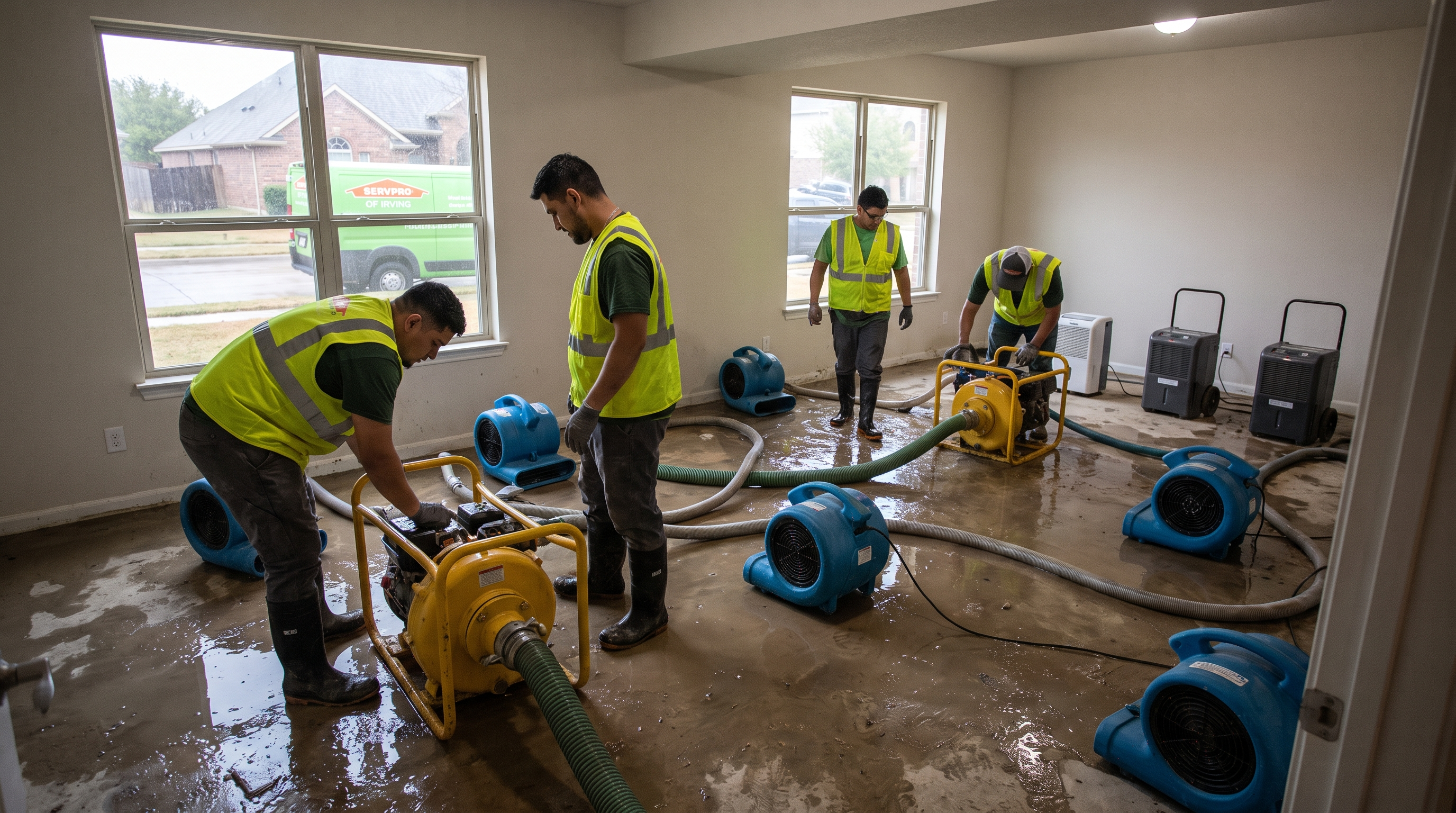
Structural drying starts after extraction removes the water that can be seen. The bigger question is what water entered drywall, insulation, wood framing, subfloor layers, flooring, cabinets, and trim. In Irving slab homes, moisture can stay at the wall-floor joint and behind baseboards long after the surface dries.
IICRC S500 drying uses a controlled approach: classify the water, map wet materials, set drying goals, place equipment, and monitor readings. Air movers push moisture out of wet surfaces while dehumidifiers remove water from the air. Heat, airflow, humidity, and material type all affect whether the setup works.
Drying decisions also affect demolition. Some wet materials can dry in place if the water is clean and the structure allows airflow. Other materials need removal because they are contaminated, delaminated, swollen, insulated, or trapping moisture where equipment cannot reach.
Irving Water Damage Restoration connects property owners with contractors who track moisture instead of guessing. That record matters for insurance and for preventing mold or long-term odor after a burst pipe, appliance leak, or roof leak.
Coppell homes often have finished interiors, attached garages, attic plumbing, and slab foundations that can hide water until flooring or baseboards swell. Winter Storm Uri exposed how quickly attic and exterior-wall pipes can fail when insulation is not built for a long freeze. A small ceiling stain may be the last sign of a much larger wet cavity.
Coppell also sees DFW storm damage that opens roof paths and sends water into insulation, drywall, and upper-floor rooms. Contractors should document the source, record moisture readings, remove unsalvageable materials, and dry according to IICRC S500 standards. Irving Water Damage Restoration helps property owners connect with licensed restoration contractors who can move before hidden moisture becomes mold risk.
Contractors connected through the service use recognized drying principles instead of relying on a quick visual check. That matters when water hides below cabinets, under flooring, and behind trim.
DFW heat, storm humidity, and closed-up homes can slow drying if equipment is undersized or poorly placed. The right setup accounts for room conditions, materials, and airflow paths.
Start drying with readings, not guesswork.
Free — no obligations