Irving's Sewage Cleanup Specialists
Clean Contaminated Water the Right Way
Sewage water needs containment, removal, disposal, and sanitation before drying equipment runs.
Irving's Sewage Cleanup Specialists
Sewage water needs containment, removal, disposal, and sanitation before drying equipment runs.
Sewage cleanup is not the same as drying a clean supply line break. Category 3 water can contain bacteria, viruses, parasites, and other contaminants. In a slab-home bathroom, laundry room, or kitchen, sewage can spread under flooring and into trim before it looks severe from the doorway.
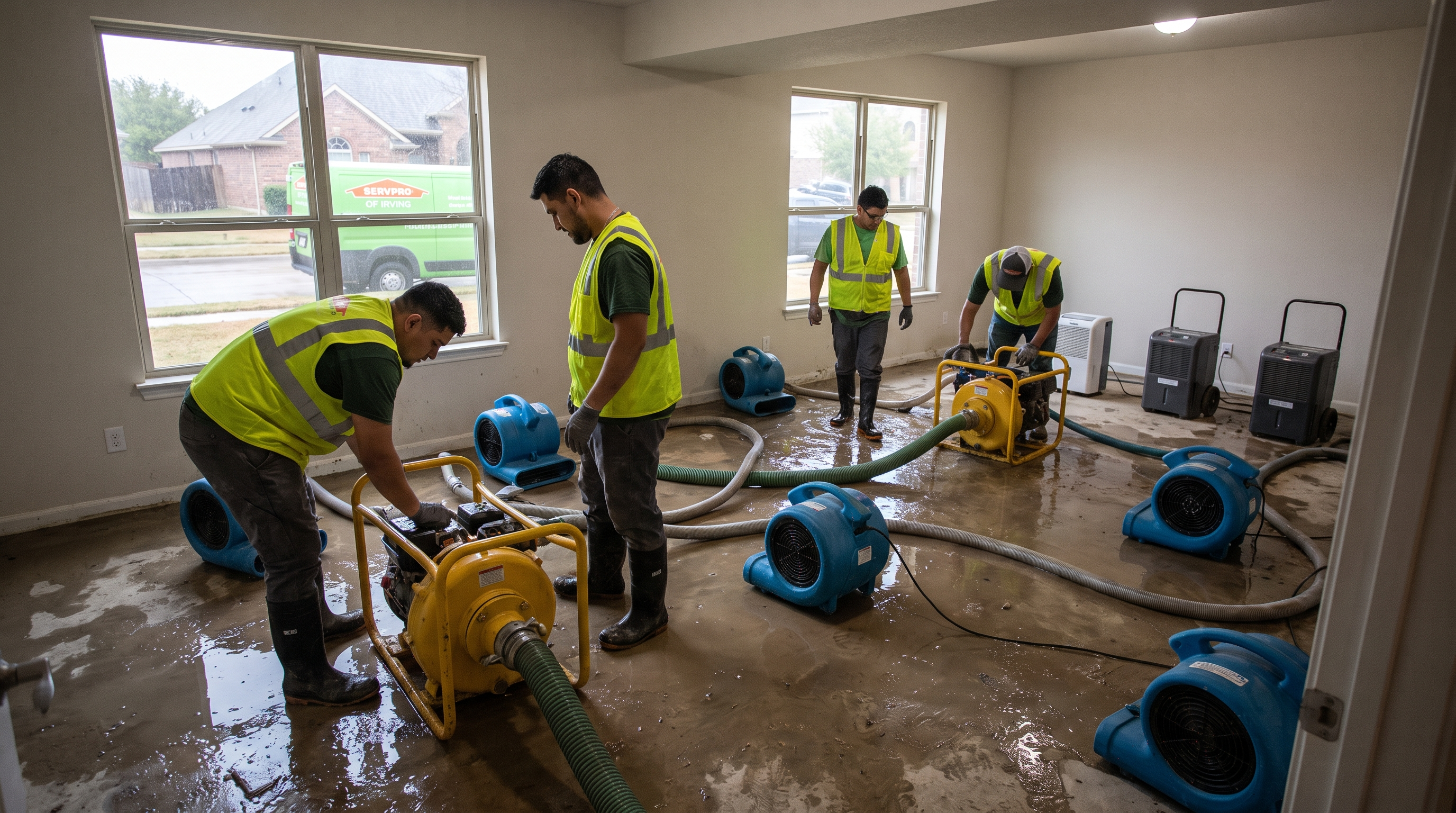
The first step is safety and containment. Crews need PPE, controlled access, and a plan to remove contaminated water and affected porous materials. Carpet pad, insulation, particleboard, and low drywall may not be salvageable after sewage exposure.
Irving properties can also see mixed-water events during heavy rain when drains back up or exterior floodwater enters the building. The source has to be documented because floodwater, sewage, and clean-water pipe breaks can involve different insurance coverage and cleanup standards.
Irving Water Damage Restoration connects property owners with contractors who can remove contaminated water, dispose of unsafe materials, clean hard surfaces, apply appropriate disinfectants, and dry the structure after the contaminated phase is handled.
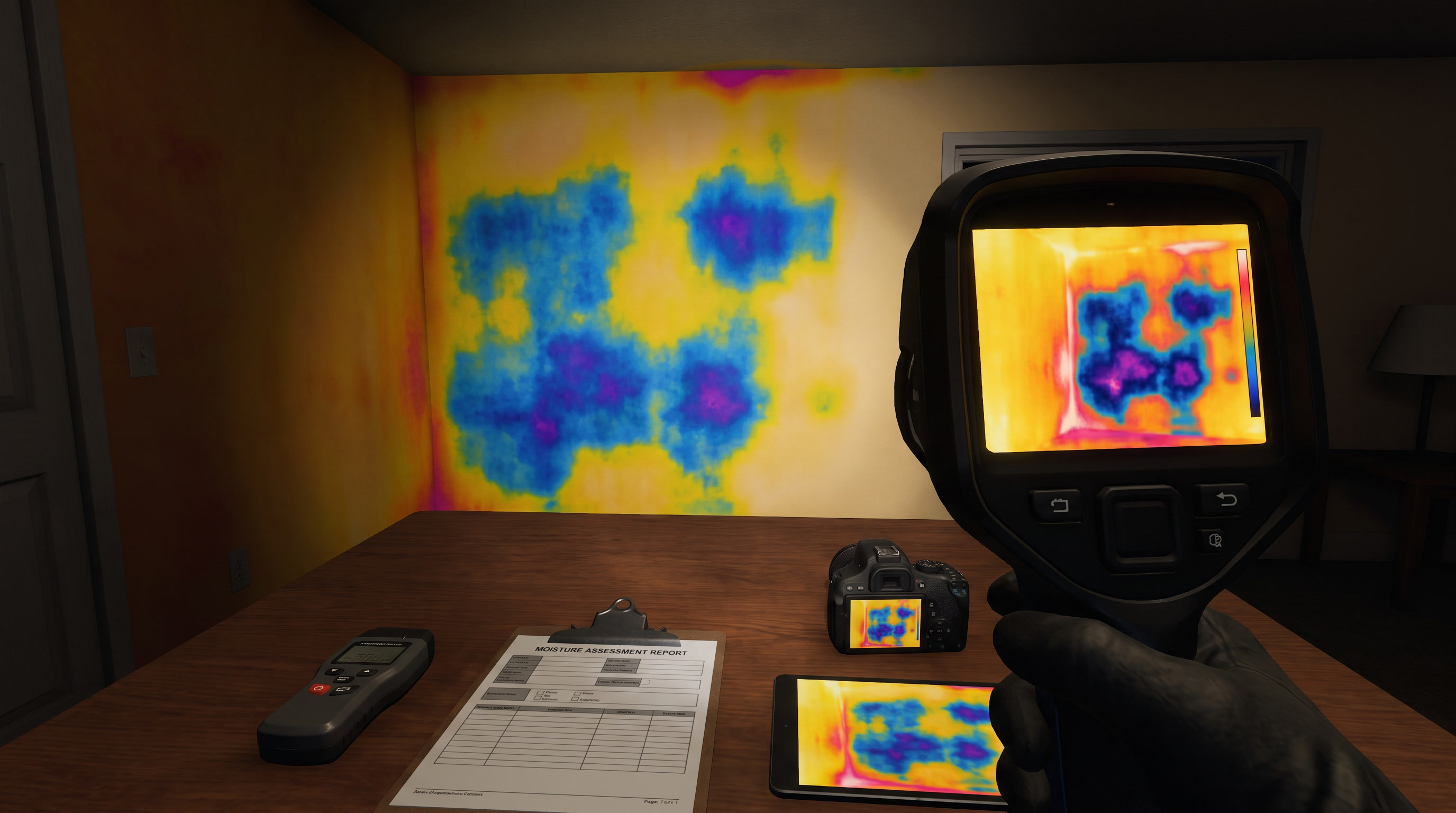
Sewage cleanup focuses on safety, contamination control, disposal, cleaning, and drying after the structure is safe to process.
Technicians isolate the affected area and use protective equipment before disturbing contaminated materials. This protects occupants, clean rooms, and the workers handling the cleanup.
Standing sewage, soaked carpet pad, contaminated drywall, insulation, and porous contents may need removal. Crews document the condition before disposal for the insurance file.
Hard surfaces are cleaned and disinfected after gross contamination is removed. Drying equipment is then used in a controlled way so contaminated air is not pushed into unaffected rooms.
Sewage can make a small-looking loss unsafe. Contractors need to identify contamination, remove unsafe materials, and clean before drying the structure.
A toilet overflow, sewer backup, drain failure, and floodwater entry can have different insurance outcomes. The contractor should document the source and affected materials from the start.
Do not walk through sewage water. Request cleanup and keep the area isolated.
Free — no obligations
The contractor checks the source, affected rooms, contamination level, and whether occupants should avoid the area.
Crews extract sewage and remove gross contamination while keeping the affected area contained.
Unsafe porous materials are removed, and cleanable hard surfaces are washed and disinfected.
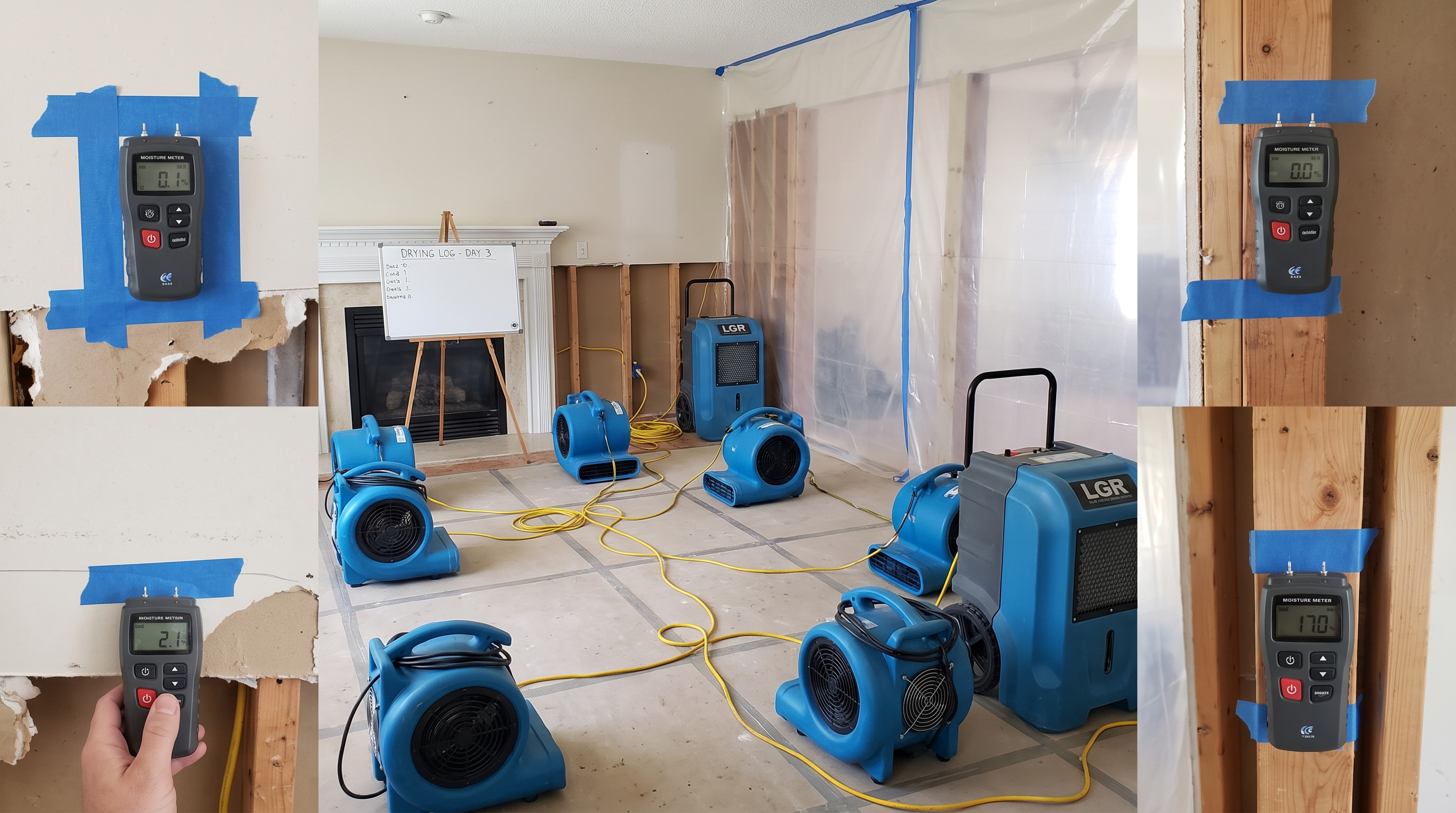
Drying equipment runs after cleaning, and the contractor checks moisture readings before repair work begins.